This site may contain copyrighted material the use of which has not always been specifically authorized by the copyright owner. We are making such material available in an effort to advance understanding of environmental, political, human rights, economic, democracy, scientific, and social justice issues, etc. we believe this constitutes a ‘fair use’ of any such copyrighted material as provided for in section 107 of the US Copyright Law.
In accordance with Title 17 U.S.C. Section 107, the material on this site is distributed without profit to those who have expressed a prior interest in receiving the included information for research and educational purposes. For more information go to: http://www.law.cornell.edu/uscode/17/107.shtml
If you wish to use copyrighted material from this site for purposes of your own that go beyond ‘fair use’, you must obtain permission from the copyright owner.
FAIR USE NOTICE FAIR USE NOTICE: This page may contain copyrighted material the use of which has not been specifically authorized by the copyright owner. This website distributes this material without profit to those who have expressed a prior interest in receiving the included information for scientific, research and educational purposes. We believe this constitutes a fair use of any such copyrighted material as provided for in 17 U.S.C § 107.
FAIR USE NOTICE FAIR USE NOTICE: This page may contain copyrighted material the use of which has not been specifically authorized by the copyright owner. This website distributes this material without profit to those who have expressed a prior interest in receiving the included information for scientific, research and educational purposes. We believe this constitutes a fair use of any such copyrighted material as provided for in 17 U.S.C § 107.
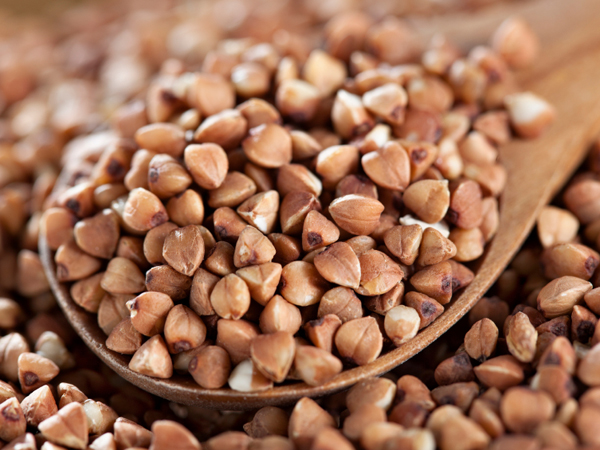
Buckwheat may be one of the healthiest foods you're not eating. Along with having numerous health benefits, it is tasty, easy to prepare and inexpensive. Here are some things I love about it:
Buckwheat is not a grain.
Many who are trying to avoid grains find themselves limited to fruit and sweet potatoes as sources of good carbs. Even though it's often included in lists of grains, buckwheat is not a grain. The edible portion is a seed from a plant related to greens like rhubarb and sorrel.
Buckwheat is gluten-free.
Because it is neither a grain nor related to wheat, buckwheat is gluten-free and safe for those with celiac disease and gluten sensitivities. Studies show that even in high concentrations, buckwheat flour and its purified proteins have no immunologic reactions for patients with celiac disease. [1]
Buckwheat is high in essential nutrients.
It is rich in many trace minerals, including manganese, magnesium and copper. It is also a good source of the B vitamins: B6, pantothenic acid, niacin, folate, thiamin and choline.
Nutrients in Buckwheat[2]
Buckwheat has resistant fiber.
Resistant fiber is a compound shown to lower blood sugar after meals, help weight loss, reduce food cravings and improve diabetes. [3] All versions of buckwheat contain resistant fiber, but the boiled kernels, called groats, contain the most at 6 percent or greater. [4]
Buckwheat has several novel nutraceuticals.
Rutin, quercetin and other bioflavonoids: These compounds have been shown to strengthen small blood vessels, which can prevent easy bruising, hemorrhoids and varicose veins. Rutin can also help prevent blood clots, lower LDL cholesterol and the production of histamine, which can improve airborne allergies and food intolerances. [5]
Tannins: Tannins are astringent phenolic compounds most commonly found in tea. They are also present in significant amounts in buckwheat. Tannins have been shown to reduce bacterial and viral infections and improve diabetes. Along with the mix of insoluble and resistant fiber, the tannins in buckwheat can improve important strains of bowel flora, such as lactobacillus and bacteroidetes, while reducing yeast and harmful bacteria. [6]
D-chiro inositol: D-chiro inositol is an exciting compound that may improve many important elements of blood sugar metabolism (such as production of glycogen and insulin sensitivity). Data suggests it may improve polycystic ovarian syndrome (PCOS) [7] and type 2 diabetes. [8]
Bound antioxidants: Recent data from cancer researchers has shown we may have been ignoring an important type of antioxidants. We have mostly considered the antioxidants in fruits and vegetables since most of these are readily available and easy to test in lab studies. Now, it is becoming clear a new category of antioxidants, called bound antioxidants, may be even more important. These are found in buckwheat and some grains and are activated by the bowel flora. Buckwheat is rich in bound antioxidants like glutathione and superoxide dismutase. These compounds are also heat stable and survive the cooking process with buckwheat. [8]
How to use buckwheat.
If you've never made it before, don't worry. Buckwheat is easy to work with. It comes in the form of groats (toasted or raw), noodles and flour. The raw groats are available completely raw or sprouted. The completely raw groats work great for making a grain-free, hot cereal. I don't use the flour much because baking entails dairy, eggs, oils and sweeteners. I'd rather not bother with all the substitutes and labor.
Try these recipes!
Buckwheat Porridge:
Ingredients:
1 cup raw buckwheat groats
3 cups water
Liquid stevia
Powdered cardamom
Instructions:
Place buckwheat and water in a 1-quart sauce pan.
Heat on low 45 minutes or until a porridge-like consistency is reached.
Add stevia and cardamom to taste.
Serve plain or with unsweetened flax milk or unsweetened coconut yogurt.
Makes: 4 servings
Sprouted Raw Groats
Raw buckwheat is easy to sprout at home with a sprouting tray. Just soak the groats for 30 minutes in cold water, rinse several times and place in sprouting tray. Rinse twice daily. They do not grow into long, grassy sprouts (like mung bean or wheat grass). Rather, the seeds open just slightly and become softer and more digestible. This typically takes three days.
You can also purchase pre-sprouted raw groats, such as found in the Go Raw brand of buckwheat granola. Sprouted buckwheat comes ready to eat. Use it like granola, but know that it is a concentrated food. A few tablespoons is a full serving. I love buckwheat sprouts as a portable food for hikes or long runs. They take up very little space and provide lots of energy.
Buckwheat Trail Mix
Ingredients
1 cup sprouted buckwheat
1/3 cup dried currants or diced raisins
1 tbsp. sea salt crystals
Instructions
Combine all ingredients.
Store in a cool, dry place out of light.
Pack in snack-sized, Ziploc bags for a portable snack.
Plan on 1/4 cup per 90-120 minutes of activity. It is that concentrated.
Makes: 5 servings
Toasted groats are also called kasha (not Kashi) and can be found in the kosher section of most grocery stores. They make a great substitute for rice as a side dish.
Kasha Pilaf
Ingredients:
1 cup kasha
1 cup water
1 cup vegetable broth
Instructions:
Place all ingredients in a 1-quart sauce pan.
Bring to a simmer.
Steam kasha for 20 minutes or until liquid is absorbed.
Let sit covered for 10 minutes.
Serve or refrigerate.
Makes: 4 servings
Buckwheat noodles are popular in Asian cuisine for good reason. Along with all the health benefits of buckwheat, I prefer their taste and texture over any of the gluten-free, grain-based noodles I've tried. They cook fast and are great served hot or cold.
Buckwheat Noodles and Ume Paste
Ingredients:
1 8-ounce package buckwheat noodles (also called soba)
1 tbsp. ume plum paste (found in Asian or macrobiotic sections of many larger supermarkets)
2 tsp. Tamari (wheat-free, fermented soy sauce)
2 tsp. cold-pressed, toasted sesame seed oil
2 green onions, sliced
Instructions:
Bring two quarts of water to a boil. Add a pinch of salt.
Cook noodles 5-7 minutes until flexible but firm, stirring frequently.
Rinse noodles in cold water, blot dry.
Pour noodles into a large serving bowl.
Stir in all other ingredients.
Makes: 6 servings
Try having buckwheat twice weekly for the next month. Keep a close eye on your digestion, your weight, how easily you can move without pain, how stable your blood sugar is and the health of your skin. You might see some good, healthy improvements!
References:
1. de Francischi ML1, Salgado JM, da Costa CP. Immunological analysis of serum for buckwheat fed celiac patients. Plant Foods Hum Nutr. 1994 Oct;46(3):207-11.
2. The Food Processor, Version 10.12.0, ESHA Research, Salem, Oregon, USA.
3. Birt DF, Boylston T, Hendrich S, Jane JL, Hollis J, Li L, McClelland J, Moore S, Phillips GJ, Rowling M, Schalinske K, Scott MP, Whitley EM. Resistant starch: promise for improving human health. Adv Nutr. 2013 Nov 6;4(6):587-601. doi: 10.3945/an.113.004325. eCollection 2013 Nov. Review.
4. Skrabanja V, Liljeberg Elmståhl HG, Kreft I, Björck IM. Nutritional properties of starch in buckwheat products: studies in vitro and in vivo. J Agric Food Chem. 2001 Jan;49(1):490-6.
5. Sharma S, Ali A, Ali J, Sahni JK, Baboota S. Rutin: therapeutic potential and recent advances in drug delivery. Expert Opin Investig Drugs. 2013 Aug;22(8):1063-79. doi: 10.1517/13543784.2013.805744. Epub 2013 Jun 25.
6. Serrano J, Puupponen-Pimiä R, Dauer A, Aura AM, Saura-Calixto F. Tannins: current knowledge of food sources, intake, bioavailability and biological effects. Mol Nutr Food Res. 2009 Sep;53 Suppl 2:S310-29. doi: 10.1002/mnfr.200900039.
7. Unfer V1, Porcaro G. Updates on the myo-inositol plus D-chiro-inositol combined therapy in polycystic ovary syndrome. Expert Rev Clin Pharmacol. 2014 Sep;7(5):623-31. doi: 10.1586/17512433.2014.925795. Epub 2014 Jun 5.
8. Larner J, Brautigan DL, Thorner MO. D-chiro-inositol glycans in insulin signaling and insulin resistance. Mol Med. 2010 Nov-Dec;16(11-12):543-52. doi: 10.2119/molmed.2010.00107. Epub 2010 Aug 27.
9. Zieliński H, Michalska A, Piskuła MK, Kozłowska H. Antioxidants in thermally treated buckwheat groats. Mol Nutr Food Res. 2006 Sep;50(9):824-32.
By training, I am a plant biologist. In the early 1990s I was busy making genetically modified plants (often called GMOs for Genetically Modified Organisms) as part of the research that led to my PhD. Into these plants we were putting DNA from various foreign organisms, such as viruses and bacteria.
I was not, at the outset, concerned about the possible effects of GM plants on human health or the environment. One reason for this lack of concern was that I was still a very young scientist, feeling my way in the complex world of biology and of scientific research. Another reason was that we hardly imagined that GMOs like ours would be grown or eaten. So far as I was concerned, all GMOs were for research purposes only.
Gradually, however, it became clear that certain companies thought differently. Some of my older colleagues shared their skepticism with me that commercial interests were running far ahead of scientific knowledge. I listened carefully and I didn’t disagree. Today, over twenty years later, GMO crops, especially soybeans, corn, papaya, canola and cotton, are commercially grown in numerous parts of the world.
Depending on which country you live in, GMOs may be unlabeled and therefore unknowingly abundant in your diet. Processed foods (e.g. chips, breakfast cereals, sodas) are likely to contain ingredients from GMO crops, because they are often made from corn or soy. Most agricultural crops, however, are still non-GMO, including rice, wheat, barley, oats, tomatoes, grapes and beans.
For meat eaters the nature of GMO consumption is different. There are no GMO animals used in farming (although GM salmon has been pending FDA approval since 1993); however, animal feed, especially in factory farms or for fish farming, is likely to be GMO corn and GMO soybeans. In which case the labeling issue, and potential for impacts on your health, are complicated.
I now believe, as a much more experienced scientist, that GMO crops still run far ahead of our understanding of their risks. In broad outline, the reasons for this belief are quite simple. I have become much more appreciative of the complexity of biological organisms and their capacity for benefits and harms. As a scientist I have become much more humble about the capacity of science to do more than scratch the surface in its understanding of the deep complexity and diversity of the natural world. To paraphrase a cliché, I more and more appreciate that as scientists we understand less and less.
The Flawed Processes of GMO Risk Assessment
Some of my concerns with GMOs are “just” practical ones. I have read numerous GMO risk assessment applications. These are the documents that governments rely on to ‘prove’ their safety. Though these documents are quite long and quite complex, their length is misleading in that they primarily ask (and answer) trivial questions. Furthermore, the experiments described within them are often very inadequate and sloppily executed. Scientific controls are often missing, procedures and reagents are badly described, and the results are often ambiguous or uninterpretable. I do not believe that this ambiguity and apparent incompetence is accidental. It is common, for example, for multinational corporations, whose labs have the latest equipment, to use outdated methodologies. When the results show what the applicants want, nothing is said. But when the results are inconvenient, and raise red flags, they blame the limitations of the antiquated method. This bulletproof logic, in which applicants claim safety no matter what the data shows, or how badly the experiment was performed, is routine in formal GMO risk assessment.
To any honest observer, reading these applications is bound to raise profound and disturbing questions: about the trustworthiness of the applicants and equally of the regulators. They are impossible to reconcile with a functional regulatory system capable of protecting the public.
The Dangers of GMOs
Aside from grave doubts about the quality and integrity of risk assessments, I also have specific science-based concerns over GMOs. I emphasise the ones below because they are important but are not on the lists that GMO critics often make.
Many GMO plants are engineered to contain their own insecticides. These GMOs, which include maize, cotton and soybeans, are called Bt plants. Bt plants get their name because they incorporate a transgene that makes a protein-based toxin (usually called the Cry toxin) from the bacterium Bacillus thuringiensis. Many Bt crops are “stacked,” meaning they contain a multiplicity of these Cry toxins. Their makers believe each of these Bt toxins is insect-specific and safe. However, there are multiple reasons to doubt both safety and specificity. One concern is that Bacillus thuringiensis is all but indistinguishable from the well known anthrax bacterium (Bacillus anthracis). Another reason is that Bt insecticides share structural similarities with ricin. Ricin is a famously dangerous plant toxin, a tiny amount of which was used to assassinate the Bulgarian writer and defector Georgi Markov in 1978. A third reason for concern is that the mode of action of Bt proteins is not understood (Vachon et al 2012); yet, it is axiomatic in science that effective risk assessment requires a clear understanding of the mechanism of action of any GMO transgene. This is so that appropriate experiments can be devised to affirm or refute safety. These red flags are doubly troubling because some Cry proteins are known to be toxic towards isolated human cells (Mizuki et al., 1999). Yet we put them in our food crops.
A second concern follows from GMOs being often resistant to herbicides. This resistance is an invitation to farmers to spray large quantities of herbicides, and many do. As research recently showed, commercial soybeans routinely contain quantities of the herbicide Roundup (glyphosate) that its maker, Monsanto, once described as “extreme” (Bøhn et al 2014).
Glyphosate has been in the news recently because the World Health Organisation no longer considers it a relatively harmless chemical, but there are other herbicides applied to GMOs which are easily of equal concern. The herbicide Glufosinate (phosphinothricin, made by Bayer) kills plants because it inhibits the important plant enzyme glutamine synthetase. This enzyme is ubiquitous, however, it is found also in fungi, bacteria and animals. Consequently, Glufosinate is toxic to most organisms. Glufosinate is also a neurotoxin of mammals that doesn’t easily break down in the environment (Lantz et al. 2014). Glufosinate is thus a “herbicide” in name only.
Thus, even in conventional agriculture, the use of glufosinate is hazardous; but With GMO plants the situation is worse yet. With GMOs, glufosinate is sprayed on to the crop but its degradation in the plant is blocked by the transgene, which chemically modifies it slightly. This is why the GMO plant is resistant to it; but the other consequence is that when you eat Bayers’ Glufosinate-resistant GMO maize or canola, even weeks or months later, glufosinate, though slightly modified, is probably still there (Droge et al., 1992). Nevertheless, though the health hazard of glufosinate is much greater with GMOs, the implications of this science have been ignored in GMO risk assessments of Glufosinate-tolerant GMO crops.
A yet further reason to be concerned about GMOs is that most of them contain a viral sequence called the cauliflower mosaic virus (CaMV) promoter (or they contain the similar figwort mosaic virus (FMV) promoter). Two years ago, the GMO safety agency of the European Union (EFSA) discovered that both the CaMV promoter and the FMV promoter had wrongly been assumed by them (for almost 20 years) not to encode any proteins. In fact, the two promoters encode a large part of a small multifunctional viral protein that misdirects all normal gene expression and that also turns off a key plant defence against pathogens. EFSA tried to bury their discovery. Unfortunately for them, we spotted their findings in an obscure scientific journal. This revelation forced EFSA and other regulators to explain why they had overlooked the probability that consumers were eating an untested viral protein.
This list of significant scientific concerns about GMOs is by no means exhaustive. For example, there are novel GMOs coming on the market, such as those using double stranded RNAs (dsRNAs), that have the potential for even greater risks (Latham and Wilson 2015).
The True Purpose of GMOs
Science is not the only grounds on which GMOs should be judged. The commercial purpose of GMOs is not to feed the world or improve farming. Rather, they exist to gain intellectual property (i.e. patent rights) over seeds and plant breeding and to drive agriculture in directions that benefit agribusiness. This drive is occurring at the expense of farmers, consumers and the natural world. US Farmers, for example, have seen seed costs nearlyquadruple and seed choices greatly narrow since the introduction of GMOs. The fight over GMOs is not of narrow importance. It affects us all.
Nevertheless, specific scientific concerns are crucial to the debate. I left science in large part because it seemed impossible to do research while also providing the unvarnished public scepticism that I believed the public, as ultimate funder and risk-taker of that science, was entitled to.
Criticism of science and technology remains very difficult. Even though many academics benefit from tenure and a large salary, the sceptical process in much of science is largely lacking. This is why risk assessment of GMOs has been short-circuited and public concerns about them are growing. Until the damaged scientific ethos is rectified, both scientists and the public are correct to doubt that GMOs should ever have been let out of any lab.
At the local farmers market during late summer, the price is right on ripe heirloom tomatoes, and the quality can be incomparable. So of course a lot of people who love good, fresh produce are going to show up to buy them. But new research from the University of Iowa indicates that when we hand over cash for our local Cherokee Purples, we’re engaged in a lot more than food shopping.
It’s unique for research to combine qualitative and quantitative results. Empirically, we know there were 8,268 farmers markets operating in 2014, up 180 percent since 2006. What’s harder to understand, and what the paper’s coauthors are still reviewing, is why.
“The surprise is that there really are a variety of reasons why people go to the farmers market,” said study coauthor Ion Vasi. Those reasons go beyond the improved freshness and taste of a higher-quality product. In jargon-heavy academia, farmers markets fit into what theorists call “moralized markets.” In common parlance, we might say we’re shopping our values, or, put more politically, voting with our dollar.
“The value of the product is not just the economic transaction, it’s also the social currency that goes into it,” Vasi explained. What methods were used to grow the vegetables? Who picked them? Was that person paid a fair wage? All of these issues come to bear in the moralized marketplace, where “part of the value put on the product is the human side of how it is produced,” he said. Marketers have caught on to this, of course, which is why seemingly eco-friendly companies are charged with greenwashing and consumers are getting hip to health halos.
The idea that our food choices are political and that there are human and environmental costs (which are often hidden) to our industrial food system is what’s changing the way people shop. Farmers market shoppers, as well as co-op members and CSA subscribers, participate in the moralized market with the perception that they are paying for food produced in line with their values about personal and public health, environmental sustainability, and/or animal welfare. The study found farmers markets were significantly more likely to exist in cities with more volunteer associations and where there’s a history of health and environmental advocacy.
The harder-to-quantify result from the research is our human desire to connect and food’s unique ability to facilitate that. Asked why they shop at their local markets, respondents mentioned the atmosphere, the “hometown feel,” live music, and that people “seem happy.”
“The community aspect is very strong for many people,” Vasi said. “We looked at theories that would explain the relationships people have in the markets. We had a gut feeling that this may have something to do with people wanting to connect to each other.”
In other words, we’re not only shopping at the farmers market because of increased awareness of the human costs of food but for the greater, contextually meaningful human connections themselves.
“It’s something that indicates there is something we kind of lost and are nostalgic and yearn for as a society,” Vasi added. It’s an ineffable feeling absent at chain supermarket megastores, even as many increasingly carry local and organic products.
Vasi’s previous work focused on issues of grassroots community—why do some communities adopt local resolutions on everything from civil liberties to peace to immigration? His interest in studying local food is an extension of that research. Based on farmers market growth numbers alone, he said, “It’s one of the most important types of change happening right now.”
A look into the politics of food makes it clear how and why Americans no longer have the right to grow and eat whatever they want.
By Nicole Faires March 2014
When corn became subsidized, farmers began overproducing it in the same way they had wheat and cotton. To find a market for all that extra corn, the United States began producing massive amounts of inexpensive high fructose corn syrup.
Photo by Fotolia/Jeno
Consumers should be concerned about where their food comes from. InFood Tyrants(Skyhorse Publishing, 2013), homesteader and writer Nicole Faires opens our eyes to a wide-scale problem that isn’t going away. With hands-on knowledge and a new view of the American farmer, Faires suggests the answer lays in the soil and provides the information necessary to make informed, healthy food choices. The following selection, from Chapter 1, offers a glimpse into the politics of food that run America.
“I saw all the people hustling early in the morning to go into the factories and stores and the office buildings, to do their job, to get their check. But ultimately it’s not office buildings or jobs that give us our checks. It’s the soil. The soil is what gives us the real income that supports us all.”
—Ed Begley, Jr.
The Abridgement of Freedom
“I believe there are more instances of the abridgement of freedom of the people by gradual and silent encroachments by those in power than by violent and sudden usurpations.” —James Madison
You may not realize it yet, but you do not have the legal right to grow and eat anything that you want, and food has become a very complex issue. However, this right was not lost overnight, because originally food was not political. Article 1, Section 8 of the US Constitution would have included agriculture if any of the founding members or later leaders believed that the government had any say in the matter. Our relatively young food “industry” was still safe in the 1920s, when President Coolidge vetoed a complex price-fixing bill for various crops. He said, “I do not believe that upon serious consideration the farmers of America would tolerate the precedent of a body of men chosen solely by one industry who, acting in the name of the Government, shall arrange for contracts which determine prices...Such action would establish bureaucracy on such a scale as to dominate not only the economic life but the moral, social, and political future of our people.”
These politics of food he meant to avoid, however, is now a staple of most of the food industry legislation in America today. Only ten years after Coolidge, Hoover introduced the Farm Board, which fixed the price of wheat and cotton. The Farm Board had good intentions, but its policies had far-reaching consequences. If the price of wheat or cotton dropped too low, the government would step in and buy it at the fixed price. This relative financial security convinced many farmers to start producing wheat and cotton, and pretty soon they had too much of it. Supply far outstripped demand. That’s when President Roosevelt created the Agricultural Adjustment Act. Rather than paying farmers too much for a worthless crop, the government now paid them not to grow wheat or cotton. By that logic, any business that got into trouble by poorly estimating the market should be “bailed out” and paid to prevent stupidity. But this only applied to farmers.
These subsidies had a completely unexpected result many years later. When corn became subsidized, farmers began overproducing it in the same way they had wheat and cotton. So, to find a market for all that extra corn, the United States began producing massive amounts of inexpensive high fructose corn syrup, which became a major ingredient in many, many manufactured foods. We’re now very aware how bad high fructose corn syrup is for us, and yet the USDA, which is responsible for publishing healthy food guides for millions of children, has no problem handing out money for it.
However, to truly find a solution for our nation’s food problems, it is necessary to go all the way back to the foundation of food: the soil. When we talk about the loss of our right to healthy food, what we are really talking about is losing our freedom to access soil to grow it. When we talk about the toxic state of the factory farms supplying the majority of our food supply, what we are really discussing is the gross mismanagement of our land. We are so quickly destroying our ability to feed ourselves that in a short while we will be completely dependent on others. This all comes down to dirt.
It is no longer possible to allow others to retain responsibility for our food supply without severely endangering a healthy future for the next generation. This means that the current rhetoric of Know Your Farmer will need to become much more personal. It should be Everyone Is a Farmer. I am hopeful that someday we will live in a culture where growing food is a matter of course, something almost everyone will do on balconies and backyards, and farms will dot urban landscapes on every corner, employing vast numbers of willing unemployed workers. This is the path to the restoration of our full freedoms, but it will not come without a cost. The deeply entrenched corporate agenda of the USDA, the millions of dollars corporations pour into legislation, and our own voracious appetites stand in the way.
The Loss of Farmland
“Quit thinking about decent land use as solely an economic problem. Examine each question in terms of what is ethically and esthetically right, as well as what is economically expedient. A thing is right when it tends to preserve the integrity, stability and beauty of the biotic community. It is wrong when it tends otherwise.” —Aldo Leopold
According to the American Farmland Trust, America lost farmland at a rate of one acre per minute between 2002 and 2007, totaling 4 million acres, and that rate has only increased. Urban development, suburban sprawl, and commercial building all find farmland appealing for the same reasons it is good for farming: It has been cleared and leveled and has good drainage. Unfortunately, not all soil can grow plants. Decent farmland is actually relatively rare in comparison to the rest of the terrain. Rocky places, forests, floodplains, mountains, rivers, lakes, and canyons don’t make good farmland and are more than likely not worth transforming.
Why don’t farmers just stop selling their land? The number one reason is that farmers are getting old. USDA farm census numbers show that in 1997 the average farmer was fifty-four years old, and by 2007 the average had become fifty-seven. This would not be a terrible problem if more than1 percent (as opposed to 38 percent in 1900) of the population actually farmed the land and those farmers were not aging. Most of the next generation doesn’t seem interested in taking over these farms, and so the farmers sell land to finance their retirement or even medical bills. As the demand for land increases, the next generation of farmers finds itself priced out of the market by wealthy developers.
There are some who downplay the loss of farms by rationalizing that 4 million acres isn’t really that much in relation to America’s total landmass, which is about 2.4 billion acres. But this farmland is the most valuable acreage in America because of its soil quality. Good farmland usually has a couple of feet of precious topsoil, but the quality is not simply measured by the quantity of nutrients it has. The structure of the soil is just as important because it can take decades or even hundreds of years to build up a mixture that is perfect. Besides humus (decayed organic matter), there are minerals, clay, and sand that come together to retain water, but still let it drain at the right rate and insulate roots at just the right temperature. This kind of rare and valuable soil is called loam.
Many farms in the United States have been cultivated since they were first cleared during the Colonial period. When the settlers arrived, they found much of North America fully forested, and so they had to clear the land by hand, removing trees and rocks. The forest floor made a rich base for plant life. Some of the land lay in fertile valleys that had been flooded by rising lakes and rivers and fertilized by fish. The early farmers worked the land carefully and sustainably and never pushed the soil beyond its limits. This practice continued until the 1920s, when war and mechanization changed how farming was done. Young men came home from the front only to leave again for city jobs. They were soon replaced by tractors. Farms began to focus on monoculture, or growing one type of food only, rather than producing meat, vegetables, and grain together in the aesthetic form we still picture in our minds today. The size of these farms increased as investors bought up generational farmland and conglomerated it.
Underutilized chemical factories left idle after the war were put to work creating chemical fertilizer, herbicides, and fungicides. On a large scale, the historical and fertile farmland of the past became contaminated by toxic materials and depleted of any nutrients, as farmers became completely dependent on chemicals. Farmers were stunned when they began experiencing mass crop failure and tremendous soil problems on farmland that had faithfully provided for generations, but it wasn’t until the catastrophic drought of the 1930s that people realized how bad the situation was. America’s heartland dried up, and the overgrazed and overplowed soil simply blew away for the next eight years. According to Cary Nelson, by 1934, the drought affected 75 percent of the United States, and the billowing soil carried by the wind created horrific dust storms that killed thousands of people. Sunday, April 14, 1935, became known to history as Black Sunday, as a mountain of dust rolling across the Plains turned day into night. People were stranded for hours as the tsunami of topsoil made its way across the Midwest and travelled all the way to Washington, DC. It was because of this storm that the region became known as the Dust Bowl.
Just a few weeks before Black Sunday, President Roosevelt’s advisor Hugh Hammond Bennett had testified before Congress that the nation desperately needed better soil conservation methods. When the dust obscured the sun, he pointed out the window to his colleagues and said, “This, gentlemen, is what I’ve been talking about.” Obviously there was very little argument, and Congress created the Soil Conservation Service under the USDA before the end of that year. Farmers were taught to use crop rotation, cover crops, better plowing techniques, and basic soil care, all skills their forefathers had been using only forty years before. Nelson found that planting windbreaks and alternative plowing strategies reduced erosion by 65 percent, but by that time there had already been a massive exodus away from the Midwest as crops failed. Skeletons of farms were strewn across the Plains as farmers abandoned farming for good, leaving the land to be repossessed by banks.
In 1942, J. I. Rodale promoted the word organic to describe a method of farming that did not use chemicals and took care of the soil, but it was forty years before that method was embraced and any real change began. The chemical industry was (and still is) a very powerful force, and it wasn’t until the 1990s that more than a few outspoken activists, scientists, and die-hard gardeners took any real notice of it. One hundred years after our departure from sustainable growing methods, farmers and consumers are finally beginning to recognize that some of the soil-conserving methods of the past are better for the soil—and for us. However, despite our awareness of the problem, and the massive drought of the 1930s, there has not been enough change. According to the National Oceanic and Atmospheric Administration (NOAA), 2012 has seen the worst drought since the Dust Bowl, affecting 56 percent of the United States with moderate to extreme drought in June. At the time of this writing, much of the soybean, wheat, and corn crop has been lost, and better soil management practices could have prevented it.
The damage has already been done. Even though the number of sustainable farms has been increasing every year, available farmland has also been shrinking at a steady rate. Considering that the vast majority of farms are not using sustainable soil practices despite the efforts of the Soil Conservation Service (now known as the NRCS), our available fertile soil is decreasing through each mismanaged crop cycle. Add to this our increasing population and dependence on cheap imported food and the rate could be even higher.The USDA census estimates the United States lost 1.7 percent of its farmland within a five-year span, which means that with all factors considered, all of America’s farmland will probably be completely gone within three hundred years. That may seem like a long time, but consider the effect of losing just 20 percent of the farmland. A country so dependent on import for food is a country that will fall victim to rising prices, substandard quality, and even possible political turmoil. Food is so vital for survival that it becomes a mechanism of control. If you don’t see it, your children will within the next sixty years.
Out of Sight: The Labor Abuses Behind What We Eat Shrimp processing plant, Can Tho province, Vietnam, 2007 (ILO / Flickr)
When you think of the globalized economy, you might not think of food. But capital mobility and the legal framework facilitating it have tremendously shaped the food system. It has transformed where and how our food is produced, who grows it, and how it affects the ecosystem.
NAFTA’s agricultural provisions allowed American farmers to dump their products on the Mexican market while raising animals fed on cheap American corn. This transformed Mexico. Mexican pig farmers went out of business because pork prices dropped so low. In 1995 Mexico imported 30,000 tons of pork from the United States, and in 2010 it imported 811,000 tons. Mexican hog farmers had to leave their farms to make a living. Some migrated north, becoming undocumented immigrants in the United States. A group of those people found work in a Smithfield Foods processing plant in North Carolina. Smithfield used these immigrants to bust a union-organizing campaign in the plant. When some of those immigrants in turn joined the union, Smithfield called the Immigration and Naturalization Service to report itself for immigration violations.
One morning, twenty-one workers were individually called to their supervisor’s office, arrested, imprisoned for using false social security cards, and then deported. Hundreds of other workers fled town, fearing they would be deported next. For Smithfield executives, the fines for hiring undocumented workers were the price of a union-free workplace. This actually backfired on Smithfield because the company had to replace those workers with union-supporting African Americans, and the United Food and Commercial Workers International Union, the nation’s largest food worker union, won an election there in 2008. But Smithfield’s strategy often does work. An Iowa slaughterhouse turned itself in for immigration violations in 2008 in a similar attempt to disrupt union organizing. Immigration and Customs Enforcement officials entered the plant and arrested 389 of its 970 workers. This time, the union drive stalled.
Many of the Mexican workers in North Carolina came from the state of Veracruz, on the Gulf Coast. Those who stayed behind in Veracruz also found themselves fighting Smithfield. NAFTA rules facilitating land privatization allowed American agricultural companies to create U.S.-style agribusiness operations in Mexico. Smithfield built a pork-processing facility in Veracruz, and it treated the people who lived around that facility as poorly as the workers in North Carolina. The company buried dead pigs in unlined pits. When those pigs decomposed, they contaminated the local water supply. Local residents organized to stop Smithfield from expanding the new facility and won.
This Smithfield story tells us much about food’s role in the globalized economy. First, it shows that the food industry outsources production for the same reasons as other industries—to pollute and to exploit workers while minimizing resistance from empowered locals with labor and environmental organizations. The meat industry already locates its facilities in antiunion states such as North Carolina, and even politicians in more progressive states, like Maryland governor and Democratic candidate for president Martin O’Malley, oppose regulations demanded by citizens to keep their water clean because they fear that the meat industry will move to another state. If the regulations in all the states become too strict, NAFTA has opened up Mexico to American agribusiness. States compete with states and nations with nations in a race to the bottom. Ecosystems and workers suffer.
Corporations do not care about national borders so long as they can accomplish their objectives. Whether the slaughterhouse is in North Carolina or Veracruz, most of us never see where our food comes from. When it makes sense to invest in Mexico, agribusinesses do so. But they can also move to the vast Great Plains or the South, where environmental regulations are few and labor unions weak. As Timothy Pachirat writes in his powerful firsthand account of working in a Nebraska slaughterhouse, “Distance and concealment operate as mechanisms of power in modern society.” Hiding food production protects companies by concealing how the industry treats animals, what it dumps into the ecosystem, and how it treats workers. Today’s consumers might eat organic food, but that does not mean the food is produced in a way that contributes to social justice. It does not mean that the people growing the food, butchering the meat, or serving you in the restaurant are treated humanely. Peeling off the food industry’s concealing blindfolds can empower consumers to again fight for labor and nature.
Public knowledge of working conditions and animal treatment is the food industry’s worst nightmare. This is the motivation behind a series of so-called ag-gag bills to criminalize undercover footage of industrial farming operations. Iowa, Utah, and Missouri have these laws, and Idaho joined them in February 2014. In Idaho, it is now illegal for anyone not employed by the farm—and for anyone who misrepresented themselves to get hired—to make video recordings of what happens on that farm without the express consent of the owner. Violators could receive a year in prison and a $5,000 fine. Agribusiness pushed for the law after an undercover video showed workers beating and sexually abusing cattle at an Idaho dairy operation. Animal rights groups are challenging on constitutional grounds, but it is a dangerous advance in the concealment of industrial activity. If laws protect what happens in meat factories from view, why would they not give all factory owners legal standing for concealment? Why not make the documentation of violations of workers’ rights or the dumping of pollution in any industry a crime? Although court challenges will result, if these laws are held up, they are a very scary legal aid to corporations concealing their operations.
We once knew more about who raised our meat and how it was processed. Until after the Civil War, most Americans lived on farms or in small towns. Food production was largely local, supplemented by larger national and international markets for foods like sugar and coffee. Meat was especially local. People wanted to see the meat they bought, particularly their beef. Given that fresh beef goes bad quickly, consumers did not trust anything that was not butchered locally. Until the late nineteenth century, people raised their own animals, bought meat from nearby farmers, or went to butchers who knew where the animal came from. Even big cities like Boston and New York had slaughterhouses to provide freshly slaughtered beef.
When American cities exploded in size after 1880, local food production became harder. A city of a million people could not easily grow its own food or slaughter its own meat. The advent of refrigerated railcars in the 1880s turned meat into an industrial product and played a major role in separating the production of food from everyday lives. Refrigeration meant that meatpackers could precut beef and send it across the country without concern about spoilage. To overcome people’s concerns about its quality, the companies took a loss in selling their meat, undermining local butchers and creating new markets for cheap meat that would generate profit after the smaller competitors shut down. Millions of cows that grazed on the Great Plains rode trains to Chicago where they went into huge stockyard pens. They were killed in enormous slaughterhouses, processed into a variety of products, and then shipped by train to consumers across the country. By the early twentieth century, beef was not from a cow but from a package you bought at a local market. Once Americans became used to refrigerated or canned beef, they assumed it was good meat. That assumption was often mistaken.
Beef processing facilities in Chicago, 1900 (Library of Congress)
The gargantuan meatpacking district of Chicago achieved fame and became an international tourist attraction. But, as Upton Sinclair described in his famous 1906 novel The Jungle, these factories created treacherous work conditions and nasty food. Slaughterhouse workers stood on floors soaked in blood and water in very cold temperatures, with flying hooks and knives risking their limbs and lives every second. They began forming unions in the 1890s to improve their lives, but it was not until the creation of the CIO-affiliated Packinghouse Workers Organizing Committee (later the United Packinghouse Workers of America or UPWA) in 1937 that they achieved major gains in pay and working conditions. Organized labor increasingly played a big role throughout the nation’s food economy after the 1930s. UPWA members cut beef in Chicago. The milkmen delivering glass jars of fresh milk to doorsteps were Teamsters. By the 1960s, unionized meat cutters made 28 percent more money than average workers made for nondurable manufacturing.
While meatpackers came to terms with the unions, unionization and good wages were bad outcomes for trucking companies, grocery store chains, and the Republican Party. A 1955 union contract won by the meatpacker unions that put a collective $50 million in workers’ pockets begins the recent history of capital mobility in meat production. This contract frustrated Eisenhower administration officials, who faced heat over high beef prices. Secretary of Agriculture Ezra Taft Benson and his undersecretary Earl Butz, who later created the modern farm subsidy system while Secretary of Agriculture under Richard Nixon, wanted to raise farm profits without increasing consumer costs. Their answer was to undermine unions and squeeze wages by moving meat production out of the cities and into nonunion plants in the countryside, near where the cows and pigs were farmed.
New upstart meatpackers, with the support of trucking and grocery chains who profited from cheaper meat, introduced refrigerated trucks that allowed meat processing in union-free rural areas. This undermined the big Chicago packinghouses and their unions. The new rural corporations had ruthless antiunion mentalities. Iowa Beef Packers (IBP) became a leading meatpacker in the 1960s. Today part of Tyson Foods, IBP rapidly consolidated the rural meatpacking operations in the Midwest, built enormous feedlot operations on the Great Plains, and created nonunion workplaces with low wages. In 1969, IBP workers in Dakota City, Iowa, went on strike. IBP hired scabs to replace them. Violence broke out on both sides and one person was killed. When unionized butchers in New York City refused to sell IBP beef, the company made a deal with the Mafia to break the boycott, undermining the strike. IBP wages were soon 50 percent lower than in the Chicago plants. The big meatpackers could not compete, closed their unionized slaughterhouses, laid off twelve thousand workers, and moved their operations to the Plains as well. Further IBP hard-line antiunion strategies led to the rapid weakening of the UPWA, which became the United Food and Commercial Workers (UFCW) in 1979.
The new geography of meatpacking, with its decentralized production, low wages, and poor working conditions, meant that farm owners earned more money and consumers maintained low beef prices. Workers—never seen by consumers—were caught in the middle. Nonunion factories demanded vastly increased production from their workers. Fatigue, repetitive-motion injuries, serious accidents on the job, and high turnover followed. One IBP manager considered an average annual turnover rate of 96 percent at a plant “low,” showing how little the corporation cared to provide labor dignified enough conditions to keep workers on the job.
The companies might not have wanted unions, but many in the new rural workforce did. Poultry truck drivers joined the Teamsters in North Carolina. The UFCW had major successes organizing southern poultry factories during the 1980s. The largely African American workforce in these plants took major personal risks by unionizing to improve the low wages and unsafe working conditions. Companies responded by closing unionized factories and opening new nonunion plants nearby, intimidating new hires into signing union-decertification petitions, or declaring bankruptcy and reopening the plants without union contracts. They also began replacing African American workers with immigrants, often undocumented, from Mexico and Central America. An Immigration and Naturalization Service investigation in 1991 led to accusations that Tyson Foods paid smugglers to bring employees up to their plants from Mexico and Guatemala. Most unionized plants faded in the face of this determined antiunion effort.
With union-free workplaces and undocumented workers, employers created an exploitative system of labor in the Plains states that looked more like the outsourced maquiladoras of Mexico than the unionized shops of Chicago. In 2005, Human Rights Watch released a report saying the American meat industry violated basic human and worker rights because of the terrible workplace safety, violations of freedom of association, and exploitation of undocumented immigrants. A decade later, little has changed. Meatpacking is a dangerous, nonunion, polluting industry that fights worker organizing through hiring, intimidating, and firing vulnerable workers, and it avoids pollution standards through threats to move operations.
Conditions are arguably even worse in the international fish industry. At Walmart, you can buy inexpensive bags of frozen crawfish and shrimp. As with clothing subcontractors, Walmart signs contracts with suppliers that provide shellfish at low cost. And as in the apparel industry, Walmart’s pressure for low prices means seafood suppliers squeeze every cent out of labor. In 2012, the Worker Rights Consortium issued a report excoriating Walmart for contracting with C.J.’s Seafood, a crawfish processer that brought guest workers from Mexico to its Louisiana processing facility. C.J.’s forced them to work sixteen to twenty-four-hour shifts and locked them in the plant. Workers were threatened with deportation if they complained. Despite these threats, a worker named Ana Rosa Diaz, who had left her four children at home in Tamaulipas, Mexico, to find work, called the National Guestworker Alliance and reported the conditions. This started a series of investigations, including by the U.S. Department of Labor. Scott Nova, executive director of the Worker Rights Consortium, said, “The extreme lengths of the shifts people were required to work, the employer’s brazenness in violating wage laws, the extent of the psychological abuse the workers faced and the threats of violence against their families—that combination made it one of the most egregious workplaces we’ve examined, whether here or overseas.” This pressure and bad publicity led Walmart to suspend the contract, but not to change its own labor practices or take any responsibility for the manufacturing of its products.
States such as Louisiana promote themselves as “business friendly,” attracting corporations with the unstated promise that companies like C.J.’s can operate with little state interference. Increasingly, though, companies like Walmart want to avoid even the possible threat of a reduction in supply through regulations. Shellfish production has moved decisively overseas over the past two decades. More than 80 percent of shrimp eaten in the United States comes from other nations, with Bangladesh, Vietnam, and China increasingly providing Americans with their inexpensive shellfish. Those governments do not enforce labor laws in fish-processing sites. Immigrant workers in a shrimp factory in Thailand’s Songkhla Province that supplies Walmart went on strike in 2012. They struck over their filthy barracks and a reduced food allowance that left them starving. The Cambodian and Burmese workers cannot read Thai, are in debt to traffickers for their expenses in getting to Thailand, and have little recourse to improve their lives. Walmart originally claimed it had told the Songkhla supplier this behavior violated its labor codes, but it later denied ever having received products from that factory, despite overwhelming physical evidence to the contrary. Thai police fired gunshots in the air to break up the strikers, demonstrating that the government’s interest was in protecting the fish elite and foreign contracts, not ensuring basic human rights. The new government in Thailand, following the 2014 coup, is even worse in its contempt for workers and the poor.
USDA officials inspect a seafood processing operation at Tianbao in China, May 6, 2004 (USDA / Flickr)
On fishing boats, conditions are even worse. Labor brokers sell migrant workers from around Southeast Asia to the mackerel fishing industry until the immigrants pay off their debts. Fifty-nine percent of these workers have witnessed the murder of another worker. One ship owner killed all fourteen of his workers rather than pay them. Meanwhile, fish exports continue to grow in importance to the Thai economy. Thailand is now the third-leading exporter of fish in the world. The United States imported $2.5 billion in seafood from Thailand in 2012, including more than 20 percent of the nation’s mackerel and sardines.
The food products we buy in the middle aisles of the supermarket are even more obscured from their real costs than vegetables and meat. American companies have engaged in the same union busting, outsourcing, and subcontracting in processed food as in apparel or toys. These workers are subjected to the same problems of poisoning, poor conditions, and capital mobility as workers in every other industry. In 2013, Kellogg’s locked out its majority black workforce at a Memphis factory that makes Fruit Loops and Frosted Flakes in order to crush the union, Bakery, Confectionery, Tobacco Workers and Grain Millers International Union Local 252G. The company recently moved 58 million pounds of cereal production from Memphis to a new factory in Mexico where workers are required to live in company housing. It then hired a union-busting agency in Ohio to bring in scab laborers to Memphis. This one action is part of a larger move by Kellogg’s to eliminate most of its American factories and all of its unions. The company has recently closed union plants in Australia and Canada, shifting production to nonunion sites. In July 2014, a federal judge ordered an end to the lockout and the workers returned to the job, but the long-term outlook for the union members keeping their jobs does not look promising.
Here’s the thing about food: because it is so important to our lives and our health, it is one set of products where we can effectively resist the concealment of production. Eating is a profound, if everyday, experience that affects our health and our happiness. The explosive growth in farmers’ markets, concerns about genetically modified organisms, and fears of pesticides have challenged the industrial food complex, just not over its treatment of workers. Free-range chickens and cattle have become highly desirable and expensive products, both for taste and for health and safety concerns, but less so because of the workers injured and killed in the meatpacking plants.
We can see the current local food movement as a backlash against corporations’ efforts to hide their operations from us. We cannot control very much about our relationship to the larger economy. But regional food networks, with production ranging from rooftop gardens to large farms on the outskirts of cities, can bring a significant amount of food democracy back into cities while providing enormous environmental benefits compared to the current system. Eschewing monocultures for diversified food crops would cut down on the pesticides and herbicides needed, meaning less fertilizer, less pollution, and healthier rivers, lakes, and oceans as well as small farmers who could afford to live and farm without expensive chemicals.
But food movements also need to be justice movements and connect to bigger issues. If we are serious in thinking about a democratic food system, we have to support good working conditions throughout the food industry. It means we need to support farmworker and meatpacker unions. We have to end the tipped minimum wage and demand greater funding for OSHA and the FDA to inspect our food factories.
Ultimately, our food problems stem from the same lack of democracy that plagues our society. In our food system, animals are abused, workers die, waterways become polluted with animal waste, and wildlife dies. Yet most of us have no idea this is happening. If we can demand ethically produced food that allows consumers insight into food production, we can go far to reshape the world into a more just and sustainable place. Food corporations, from Monsanto to McDonald’s, hope this never happens.