Fair Use Notice

FAIR USE NOTICE


OCCUPY WELLNESS

This site may contain copyrighted material the use of which has not always been specifically authorized by the copyright owner. We are making such material available in an effort to advance understanding of environmental, political, human rights, economic, democracy, scientific, and social justice issues, etc. we believe this constitutes a ‘fair use’ of any such copyrighted material as provided for in section 107 of the US Copyright Law.

In accordance with Title 17 U.S.C. Section 107, the material on this site is distributed without profit to those who have expressed a prior interest in receiving the included information for research and educational purposes. For more information go to: http://www.law.cornell.edu/uscode/17/107.shtml

If you wish to use copyrighted material from this site for purposes of your own that go beyond ‘fair use’, you must obtain permission from the copyright owner.

FAIR USE NOTICE FAIR USE NOTICE: This page may contain copyrighted material the use of which has not been specifically authorized by the copyright owner. This website distributes this material without profit to those who have expressed a prior interest in receiving the included information for scientific, research and educational purposes. We believe this constitutes a fair use of any such copyrighted material as provided for in 17 U.S.C § 107.

Read more at: http://www.etupdates.com/fair-use-notice/#.UpzWQRL3l5M | ET. Updates
FAIR USE NOTICE FAIR USE NOTICE: This page may contain copyrighted material the use of which has not been specifically authorized by the copyright owner. This website distributes this material without profit to those who have expressed a prior interest in receiving the included information for scientific, research and educational purposes. We believe this constitutes a fair use of any such copyrighted material as provided for in 17 U.S.C § 107.

Read more at: http://www.etupdates.com/fair-use-notice/#.UpzWQRL3l5M | ET. Updates

All Blogs licensed under Creative Commons Attribution 3.0

Tuesday, April 2, 2013

'Monsanto Protection Act' Sows Seeds of GMO Anger


Fallout from Obama's signature on biotech rider continues


- Andrea Germanos, staff writer 
 
Twitpic: 


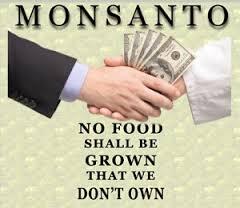
Occupy MonsantoA little-noticed rider in legislation, dubbed the Monsanto Protection Act by critics, signed into law by President Obama last Tuesday is sparking outrage as it begins to gather wider media attention and scrutiny.

Patty Lovera of the food safety advocacy organization Food and Water Watch writes that the rider
is a giveaway to genetically engineered seed companies that would allow the continued planting of genetically engineered crops even when a court finds they were approved illegally. This provision unnecessarily interferes with the judicial review process and picked up the well-deserved nickname of the “Monsanto Protection Act” because it weakens the already inadequate review process for GE crops. And it isn’t a new idea – you may remember attempts last year to include this measure and two more that would have essentially created a fast track approval process for GE crops in the Farm Bill and in USDA’s budget.
Thankfully, the rider in the continuing resolution doesn’t include the other two provisions that create the fast track approval process. But it’s still terrible news that the biotech industry can convince members of Congress who should know better, like Senator Mikulski (D-MD) who chairs the Senate Appropriations Committee, to include any bad language like this in a must pass bill.
Speaking on Al Jazeera's Inside Story Americas, Tom Philpott, food and agriculture writer at Mother Jones and co-founder of Maverick Farms, said, "What this is really about is ... ensuring that the USDA doesn't do rigorous environmental studies, impact studies of novel GMO crops. . . .  Even if a judge rules that the USDA has improperly approved these crops, what this provision states is that the USDA has to permit their planting anyway."

"I think it's a pretty clear case of checks and balances of government being overturned," he said.

Speaking on the Senate floor, organic farmer and Senator Jon Tester (D-Mont.) argued against the rider, saying:
The United States Congress is telling the Agricultural Department that even if a court tells you that you’ve failed to follow the right process and tells you to start over, you must disregard the court’s ruling and allow the crop to be planted anyway. Not only does this ignore the constitutional idea of separation of powers, but it also lets genetically modified crops take hold across this country, even when a judge finds it violates the law—once again, agribusiness multinational corporations putting farmers as serfs. It’s a dangerous precedent. Mr. President, it will paralyze the USDA, putting the department in the middle of a battle between Congress and the courts.
The rider is "a clear violation of the separation of powers between three equal branches of government,” stated Dave Murphy, founder and executive director of the grassroots group Food Democracy Now!, which gathered over 250,000 signatures to tell Obama to veto the "Monsanto Protection Act."

“Not only does the Monsanto Protection Act undermine the sovereignty of U.S. courts," Murphy said in a statement, "but it also makes it impossible for government officials to faithfully protect the American public from potential human health and environmental harms of untested genetically engineered crops.”

The rider has even roused the ire of the Tea Party Patriots.
So how did it get into the spending bill?

Foodopoly author and Food and Water Watch executive director Wenonah Hauter says just follow the money.

Speaking on Democracy Now! Tuesday, Hauter said:
I think we have to look at how much money that the biotech industry has spent on lobbying. I mean, over the last 10 years, the biotech industry has spent $272 million on lobbying and campaign contributions. They have a hundred lobby shops in Washington.
They’ve hired 13 former members of Congress. They’ve hired 300 former staffers for the White House and for Congress. And Monsanto alone has spent $63 million over the last 12 years on lobbying and campaign contributions. This is about political muscle and forcing their will on the American people. And if we don’t put a stop to it here, we’re going to see many, many more serious violations.
Eric Darier, a senior campaigner on sustainable agriculture at Greenpeace International, adds:
This should also be a reminder to all of us across the world of the ability of some corporations like Monsanto to influence policymakers to adopt measures that are against sustainable agriculture, farmers, consumers and the environment. And let’s now add to this list: independent judicial review! A very sad day for democracy and the future of our food.
The legislation may already have Obama's signature, but Food Democracy Now! is continuing its fight against the effects of the "Monsanto Protection Act."

The group is now calling on Obama to issue an executive order to require the mandatory labeling of genetically engineered foods.


* * *

  1. Even the Tea Party is pissed about the ‘Monsanto Protection Act’ http://bit.ly/YRfXsk 
  2. The Monsanto Protection Act: Why Has Obama Given Immunity to the Production and Sale of GMOs? | Common Dreams http://www.commondreams.org/video/2013/04/02-0#.UVt0YU1lId0.twitter 
  3. Did you catch our 30-minute discussion on the so-called "Monsanto Protection Act" today? Watch it here: http://owl.li/jGrzw 
  4. Full Text of the just-passed Monsanto Protection Act - http://bit.ly/10vKtXa  pic.twitter.com/mTYd9tsOOG
  5. The Real Story Behind the So-Called Monsanto Protection | by @JonEntine http://onforb.es/XWju5w 
  6. 'Monsanto Protection Act' Sows Seeds of GMO Anger http://ow.ly/jGnyV 
  7. Tea Party joins opposition to "Monsanto Protection Act" http://huff.to/14CxWGE 
  8. Tea Party Patriots Criticize 'Monsanto Protection Act' http://huff.to/11j1TIV  on @HuffPostPol take action! http://bit.ly/12dS9i9 
  9. The howling over the so-called Monsanto provision in the agriculture spending bill is all show & little substance http://ow.ly/jFUgh 
  10. Top Senator, Barbara Mikulski, Apologizes For Monsanto Protection Act http://bit.ly/Z5hRIP 
  11. Did you know some members of Congress did not know they were signing the Monsanto Protection Act? @KCETFood has more: http://bit.ly/10tzZaM 
  12. Monsanto Protection Act Signed By Obama http://planetsave.com/2013/03/30/monsanto-protection-act-signed-by-obama-gmo-bill-written-by-monsanto-itself-signed-into-law/#gsc.tab=0 
  13. Exposing the Anti-GMO Legal Machine: The Real Story Behind the So-Called Monsanto Protection Act http://onforb.es/XI6AMx 
  14. RETWEET: @SenatorBarb Mikulski don't just apologize; RESIND the Monsanto Protection Act. http://ow.ly/jGkT5  @SenateDems @Senate_GOPs too
  15. New on our blog, "Pro-GE Cat’s Outta the Bag: 'Monsanto Protection Act' Culprit is Revealed" http://j.mp/XI55y2 
  16. "Monsanto Protection Act", NDAA, do you STILL think the sitting president & the "professional politicians" have your best interests in mind?


    Martina Navratilova         @Martina
    Odd 'Monsanto Protection Act' Foe- Monsanto has absolutely no shame. Did the president know? http://huff.to/13PifNq 


    _________________________


Thursday, March 7, 2013

Corporate Food Giants Have Reason to Worry -- Some Very Brave Supermarkets Are Sharing Nutritional Score Numbers with Customers


Food  


Nuval food rankings go from 1-100; Mott's Original Applesauce gets a 4, Keebler Townhouse Bistro Multi-Grain Crackers get a 3. 


I couldn't believe my eyes.

I was in a Minneapolis branch of Byerly's, an upscale grocery chain in Minnesota. Scanning the aisles for a small extravagance for my dinner hosts, I noticed that the shelf labels included not just the price-per-unit, which I'm used to, but little blue and white linked hexagons marked on a scale of 1 to 100 -- a "NuVal" score.

NuVal scores don't tip you off to a bargain. They tell you how good or bad a food is for your health.

Yeah, right. The idea that a food store would admit -- would explicitly declare, on the spot, as your hand is reaching for it -- that a product it's selling is nutritionally crappy: that violates every principle of Marketing 101, not to mention Ayn Rand 101.

This is different from the labels that the U.S. Food and Drug Administration has required since 1990. Those are well-intentioned marvels of confusion, containing so much information (are you getting your minimum daily requirement of magnesium?), so much disinformation (calculating calories per serving, when a serving is half the amount a runway waif would eat), so much incomprehensible information (I forget -- is tripotassium phosphate good or bad for you?) that you can get an anxiety attack trying to figure out which granola will nourish you and which will kill you.

But NuVal scores make that simple, and sometimes shocking.

Cocoa Puffs, for example, gets a NuVal score of 26, but so does Life ("you don't have to be a grown-up to benefit from the whole grain inside"), and Kashi Strawberry Fields Cereal ("plenty of whole grain goodness") gets a 10, same as Cap'n Crunch.

An apple gets a 96, which you might expect. But unsweetened applesauce gets a 29, apple juice gets a 15 and Mott's Original Applesauce ("a great tasting snack that's actually good for you") gets a 4.

Nabisco Nilla Wafers ("simple goodness") get a 6, and Keebler Townhouse Bistro Multi-Grain Crackers (multi-grain! surely good for you, no?) get a 3 (no).

You'd expect fresh broccoli to get 100, as does Birds Eye Cooked Winter Squash. Grapefruits are 99, and sweet potatoes are 96. But Vlasic Old Fashioned Sauerkraut gets a 4.

Skim milk comes in at 91, 1 percent milk at 91 and 2 percent at 55. Capri Sun gets a 1. So does Odwalla Pomegranate Limeade with 20 percent juice. Who would buy products like these if they actually knew what poison -- I mean, um, empty calories -- they amount to, and if they had manifestly better alternatives an arm's reach away?

The NuVal numbers are the brainchild of David L. Katz, M.D., MPH, an adjunct associate professor at the Yale School of Medicine. A dozen doctors and nutritionists, funded by the nonprofit Griffin Hospital in Derby, Conn., developed the scoring system, based on 30 factors including vitamins, fiber, salt, sugar, fat quality, protein quality, glycemic load, energy density and calories. From the public health evidence about those factors, they constructed an algorithm that processes the data into a single number. As new food science research is published, and as products are reformulated by their manufacturers, the algorithm and the individual scores are updated. (If that's happened to any of the products I've mentioned, I'll be glad to revise the numbers online.)

It's a miracle that some 30 retail food chains are adopting the scores. You won't find them at Whole Foods or Trader Joe's, and from the locations page of the NuVal website it looks like the only chain in my neck of the woods -- Kroger, which in Los Angeles owns Ralphs and Food4Less -- is running a "pilot program in select areas" (Kentucky, apparently). But Lunds and Byerley's, which use NuVal, are venerable markets in Minnesota, as is King Cullen on Long Island, N.Y.; grocers in the NuVal fold aren't just a bunch of crunchy hippies.

As you might imagine, there's been pushback. Ocean Spray, whose Light Cranberry Juice Cocktail gets a 2, says NuVal doesn't reflect their product's urinary tract health benefits. Sara Lee, whose Ball Park hotdogs get a 7, says other Ball Park products score higher. General Mills complains that details of the algorithm aren't public, as does the National Consumers League, which turns out to be an astroturf front for the likes of Monsanto, Bristol Myers Squibb, the Chemical Specialties Manufacturers Association and the National Meat Association. And according to Dr. David Katz, the NuVal founder, the algorithm "has been described in detail in peer-reviewed publications accessible to all. It has been made available in its entirety to research groups throughout the U.S., Canada, and the U.K.; to federal agencies in the U.S.; to the Institute of Medicine; and to private entities that have requested such access."

I'm no food puritan. My culinary patrimony consists of shmaltz, gribines and kishka. (Don't ask.) I believe that the joylessness caused by renouncing "bad" foods -- and the guilt that's caused by consuming them -- conceivably undoes the good that's done by substituting celery for Oreos. I know that adding eye-popping 1-to-100 scores to grocery price tags won't cut down on gargantuan portion sizes; or make meals more mindful occasions; or alert us to our complicity with corporate farming; or prevent the processed food industry from addicting us to salt, sugar and fat; or get our butts off the couch and start moving. But giving consumers a no-brainer tool while they're standing in the supermarket aisle is surely a more promising way to stop the slow-motion suicide we call the American way of eating than declaring March to be National Nutrition Month.

This column first appeared at The Jewish Journal of Greater Los Angeles. You can read more of Kaplan's columns here, and email him there if you'd like.

Martin Kaplan, research professor at the USC Annenberg School for Communication, holds the Norman Lear Chair in Entertainment, Media and Society. He has been a White House speechwriter; a Washington journalist; a deputy presidential campaign manager; a Disney studio executive; a motion picture and television producer and screenwriter; and a radio host.

Sunday, March 3, 2013

Nestlé Recall and Mafia Connections: 5 Things You Should Know As Horse Meat Scandal Grows


Food  


The lessons extend far beyond meat products, and far beyond Europe.

Photo Credit: BKingFoto/ Shutterstock.com
 
 
By now you’ve likely heard about the horse meat scandal that is rocking Europe. As far as food scandals go, this one is intriguing. Of course, this is not the first time we’ve learned that the meat we buy may not be everything we thought it was. Remember "pink slime"? The only good news here is that, so far, it doesn’t seem to be an imminent health threat, although it does raise some very alarming questions. 

As food politics expert Marion Nestle wrote, “The unfolding drama around Europe’s horsemeat scandal is a case study in food politics and the politics of cultural identity. Cultural identity? They (other people) eat horsemeat. We don’t.”

As Nestle explains, “Most Americans say they won’t eat horsemeat, are appalled by the very idea, and oppose raising horses for food, selling their meat, and slaughtering horses for any reason.” Horse meat, however, is eaten in numerous countries around the world like China, Japan and Indonesia, as well as countries in Europe, including France and Switzerland. 

It’s one thing to knowingly eat horse meat; it’s quite another to have it slipped into your food. This opens a pandora’s box of questions about the food we're buying. For starters: What else is in there (donkey and pig, and the list may grow)? What does it reveal about food safety and our complex food chain? Who is responsible for duping consumers, and how did they get away with it?
It turns out there is a lot we can learn from Europe’s surplus of horse burgers.

1. The Mighty Fall

The most recent news surfacing today is that Nestlé, one of the largest food companies in the world, has now been entangled in the scandal. The New York Timesreports that Nestlé is pulling two products sold in Italy and Spain: Buitoni Beef Ravioli and Beef Tortellini, as well as Lasagnes à la Bolognaise Gourmandes sold to catering companies in France.  

Nestlé is just the latest in the list of Europe’s top food companies involved. The story first broke in the UK and Ireland when major supermarket chains Tesco and Aldi were found to be selling beef products that contained horse meat. It spun from there. AdAge reports, “Burger King binned thousands of Whoppers and Angus Burgers, which were sourced from the same Irish beef supplier, Silvercrest, and Findus ‘beef’ lasagna was found to contain 100% horse meat.” 
Silvercrest has been fingered, as well as Liffey Meats in Ireland and Dalepak in Yorkshire, accordingto Felicity Lawrence of the Guardian:
Silvercrest and Dalepak are both subsidiaries of ABP Food Group, one of the largest beef processors in Europe.”
... Huge blocks of frozen meat at a cold store in Northern Ireland, Freeza Foods, which had been quarantined by officials suspicious of its labelling and state of packaging, were found to contain 80% horse. 
Other top food companies were implicated when the scandal hit France (more on that soon), but the presence of large food companies at the heart of the issue is troubling. While bigger companies are often able to offer products cheaper than small and local stores, some may be questioning if the savings are really worth it if consumers are getting duped. A look at the complex supply chain raises even more fears.
Lawrence writes:
Supermarket buyers and big brands have been driving down prices, seeking special offers on meat products as consumers cut back on their spending in the face of recession. The squeeze on prices has come at a time when manufacturers' costs have been soaring. Beef prices have been at record highs as has the price of grain needed to feed cattle. The cost of energy, heavily used in industrial processing and to fuel centralised distribution chains, has also soared. There has been a mistmatch between the cost of real beef and what companies are prepared to pay.
So, are we really shocked?

2. A Tangled Web

Horse meat has ended up in so-called beef products to varying degrees — some have been found to contain traces of horse DNA, which may have been the result of processing plants not properly cleaning equipment. And some products have been found to contain upward of 80 to 100 percent horse meat, which signals a much larger problem. 

Getting to the bottom of how this came about has involved a lot of finger pointing. In Ireland, the ABP Food Group blamed supplies in Netherlands and Spain, and later Poland. “Five weeks into the scandal and the links in the Irish chain have still not been fully established,” writes the Guardian's Lawrence.” But this gets even more interesting in France, as she explains:  
Comigel had subcontracted its ready meal production to a factory in Luxembourg, Tavola. It was supplied with meat by a company called Spanghero. Spanghero had bought meat from a Dutch fraudster already convicted of passing horse off as beef, Jan Fasen.
The Dutch trader ran a company called Draap, which spelled backwards is paard or Dutch for horse. It was registered in Cyprus in 2008, with an offshore vehicle in the British Virgin Islands. It emerged during Fasen's trial in Holland that he had supplied French companies with horsemeat imported from South America and Mexico fraudulently labelled as Dutch and German "beef" going back to 2007.
The horsemeat found in the recent tests on ready meals exported from France was said to have been sourced by Draap from Romania. The Romanian government has said its meat was legally exported correctly labeled as horse. The French government said Spanghero was the first agent to stamp the horse as beef; Spanghero has denied doing so deliberately. Fasen says Spanghero and French manufacturers were in on the deception from the beginning.
It turns out there may be a whole lot more criminal to this case.

3. Trouble in Romania

It just so happens that Romania may have an excess of dead horses on its hands. John Lichfield of the Independent reports that a change in traffic rules is to blame:
Horse-drawn carts were a common form of transport for centuries in Romania, but hundreds of thousands of the animals are feared to have been sent to the abattoir after the change in road rules.
The law, which was passed six years ago but only enforced recently, also banned carts drawn by donkeys, leading to speculation among food-industry officials in France that some of the “horse meat” which has turned up on supermarket shelves in Britain, France and Sweden may, in fact, turn out to be donkey meat. “Horses have been banned from Romanian roads and millions of animals have been sent to the slaughterhouse,” said Jose Bove, a veteran campaigner for small farmers who is now vice-president of the European Parliament agriculture committee.
While the explanation of where some of the horse meat could have come from is straightforward, how it got to dinner plates is not. As Lichfield explains, “It came from abattoirs in Romania through a dealer in Cyprus working through another dealer in Holland to a meat plant in the south of France which sold it to a French-owned factory in Luxembourg which made it into frozen meals sold in supermarkets in 16 countries.”

4. Blame the Mafia

From here, the story just gets weirder. Jamie Doward reports for the Observer that organized international gangs are suspected of involvement in the scandal. Doward writes:
Experts within the horse slaughter industry have told the Observer there is evidence that both Polish and Italian mafia gangs are running multimillion-pound scams to substitute horsemeat for beef during food production. There are claims that vets and other officials working within abattoirs and food production plants are intimidated into signing off meat as beef when it is in fact cheaper alternatives such as pork or horse. ...
"I'm concerned that this is an international criminal conspiracy here and we've really got to get to the bottom of it," [Britain’s environment secretary Owen Paterson] said.
5. Rethinking Our Food

So, we found out that beef products may contain horse, and also pig, and possibly donkey, as well. What to do with that information? For some people, it means buying less meat or from different sources. Reuters reported that 60 percent of people it surveyed in the UK said they were turning to local butchers for their meat and 25 percent said they would buy different cuts instead of processed meat. 

AdAge reported that sales of frozen burgers dropped 40 percent in the beginning of February, while the meat-substitute Quorn saw a spike in sales of 10 percent. Emma Hall writes that, “More than two-thirds of British adults said they would be less likely to buy frozen meat products in the future.”  

The biggest effect so far has been a drop in public trust. But after countless food safety scandals over the years, some of them deadly, why do we trust a system that’s needlessly complex?

“The food and retail industries have become highly concentrated and globalized in recent decades,” Lawrence writes for the Guardian:
“A handful of key players dominate the beef processing and supermarket sectors across Europe. They have developed very long supply chains, particularly for their economy lines, which enable them to buy the ingredients for processed foods from wherever they are cheapest at any point, depending on exchange rates and prices on the global commodity markets. Networks of brokers, cold stores operators and subcontracted meat cutting plants have emerged to supply rapidly fluctuating orders ‘just in time.’ Management consultants KPMG estimate there are around 450 points at which the integrity of the chain can break down."
That’s worth repeating — there are 450 places where something could go wrong before your food gets into your hands.

If there was ever a reason to eat more locally produced food and to know where your food comes from and who grows and processes it, this would be a damn good one because this extends far beyond just meat products, and far beyond Europe.

Tara Lohan is a senior editor at AlterNet and editor of the new book Water Matters: Why We Need to Act Now to Save Our Most Critical Resource. You can follow her on Twitter @TaraLohan.

What it Means that Monsanto Holds the Patents on Life


Food  


How long are we going to let Monsanto bully farmers and politicians into controlling the very source of life on earth?

Photo Credit: © igor.stevanovic/ Shutterstock.com


Last week, the U.S. Supreme Court began hearing arguments in a seed patent infringement case that pits a small farmer from Indiana, 75-year old Vernon Hugh Bowman, against biotech goliath Monsanto. Reporters from the New York Times to the Sacramento Bee dissected the legal arguments. They speculated on the odds. They opined on the impact a Monsanto loss might have, not only on genetically modified crops, but on medical research and software.

What most of them didn’t report on is the absurdity – and the danger – of allowing companies to patent living organisms in the first place, and then use those patents to attempt to monopolize world seed and food production.

The case boils down to this. Monsanto sells its patented genetically engineered (GE) “Roundup Ready” soybean seeds to farmers under a contract that prohibits the farmers from saving the next-generation seeds and replanting them. Farmers like Mr. Bowman who buy Monsanto’s GE seeds are required to buy new seeds every year. For years, Mr. Bowman played by Monsanto’s rules. Then in 2007, he bought an unmarked mix of soybeans from a grain elevator and planted them.

Some of the soybeans turned out to have been grown from Monsanto’s patented Roundup Ready soybean seeds. Monsanto sued Mr. Bowman, won, and the court ordered the farmer to pay the company $84,000. Mr. Bowman appealed, arguing that he unknowingly bought soybeans grown from Monsanto’s seeds, not the seeds themselves, and that therefore the law of “patent exhaustion” applies.
The press and public have fixated on the sticky legal details of the case, and the classic David vs. Goliath nature of the fight. But win or lose, Mr. Bowman’s predicament is part of a much bigger problem.

The real issue is this: Why have we surrendered control over something so basic to human survival as seeds? Why have we bought into the biotech industry’s program, which pushes a few monoculture commodity crops, when history and science have proven that seed biodiversity is essential for growing crops capable of surviving severe climate conditions, such as drought and floods?

As physicist and environmentalist Vandana Shiva explains, we have turned seed, which is the heart of a traditional diversity-rich farming system across the world, into a powerful commodity, used to monopolize the food system.

According to a recent report by the Center for Food Safety and Save our Seeds, three companies – Monsanto, DuPont and Syngenta – control 53 percent of the global commercial seed market. They have pressured farmers to replace diverse, nutritional seeds, seeds that are resilient because they’ve been bred by small-scale farmers to adapt to local climates and soil conditions, with monocultures of genetically engineered seeds. In the U.S. these crops are predominately corn and soybeans. According to the report, entitled “Seed Giants vs. U.S. Farmers,” 93 percent of soybeans and 86 percent of corn crops in the U.S. come from patented, genetically engineered seeds.

Monsanto profits handsomely from selling its patented seeds. But the real profits are in selling farmers its proprietary pesticides, like Roundup. Farmers can spray huge amounts of Roundup on Monsanto’s Roundup Ready soybeans, killing everything except the soybean plants. It’s a win-win for Monsanto. And it’s sold as a win to farmers, who have been told that by following the Monsanto method, they’ll increase their yields and make more money. Monsanto even claims that its GE crops are the answer to world hunger.

But little of what Monsanto has promised, to farmers and the world, has proven true.

Since farmers first began buying into Monsanto’s scheme in 1995, the average cost to plant one acre of soybeans has risen 325 percent, according to the Center for Food Safety’s report. Corn seed prices are up by 259 percent. Those increases don’t include the cost of the lawsuits Monsanto has aggressively filed against farmers the company claims have violated patent agreements. By the end of 2012, Center for Food Safety calculates that Monsanto had received over $23.5 million from patent infringement lawsuits against farmers and farm businesses.

And the rest of us? What have we gained from this aggressive monopoly of seeds and crops? Nothing. In fact, the losses continue to mount.

Monsanto promised that its GE crops would help the environment by reducing the need for pesticides. But according to the USDA, farmers used up to 26 percent more chemicals per acre on herbicide-resistant crops than on non-GE crops. And as several dozen aggressive "superweeds" have become resistant to glyphosate, the primary herbicide used on GE crops, the biotech industry is ramping up its war on weeds with a new generation of GE crops that can surviving spraying with 2,4 D, paraquat, and other super-toxic herbicides.

As for GE crops being necessary to feed the world, that promise has also been debunked. In 2010, the Food and Agriculture Organization of the United Nations (FAO) warned that the loss of biodiversity will have a major impact on the ability of humankind to feed itself in the future.

According to “A Global Citizens Report on the State of GMOs: Failed Promises, Failed Technologies:”
The fable that GMOs are feeding the world has already led to large-scale destruction of biodiversity and farmers’ livelihoods. It is threatening the very basis of our freedom to know what we eat and to choose what we eat. Our biodiversity and our seed freedom are in peril. Our food freedom, food democracy and food sovereignty are at stake.
It’s safe to say that the majority of the general public would love to see the small farmer from Indiana knock Monsanto down a peg. Last year, a Monsanto ally threatened to sue the state of Vermont if legislators passed a law requiring labels on all foods containing genetically modified organisms (GMOs). 

Lawmakers capitulated, despite the fact that voter support was running at more than 90 percent. Later in the year, Monsanto and large food corporations spent $46 million to defeat a citizens’ initiative in California that would have required mandatory labeling of GMOs.

Monsanto may be Public Enemy Number One, but a win for Mr. Bowman is hardly a win for mankind. It’s time we ask ourselves: How long are we going to let Monsanto bully farmers and politicians into controlling the very source of life on earth? How long will we tolerate the growing monopolization and genetic engineering of seeds by an aggressive cabal of chemical and pesticide corporations who pose a deadly threat to our health, our environment and the future of our food? And when does “how long” become too late?

Katherine Paul is director of development and communications at the Organic Consumers Association.

Ronnie Cummins is founder and director of the Organic Consumers Association. Cummins is author of numerous articles and books, including "Genetically Engineered Food: A Self-Defense Guide for Consumers" (Second Revised Edition Marlowe & Company 2004).

Why America Has the Cheapest, Most Addictive and Most Nutritionally Inferior Food in the World


Food 


Author Melanie Warner talks about her new book "Pandora’s Lunchbox: How Processed Food Took Over the American Meal."


Photo Credit: Shutterstock.com
 
 
AMY GOODMAN: As we continue deep inside the $1-trillion-a-year "processed-food-industrial complex," we turn to look at how decades of food science have resulted in the cheapest, most abundant, most addictive and most nutritionally inferior food in the world. And the vitamins and protein added back to this processed food? Well, you might be surprised to know where they come from. That’s the focus of a new book by longtime food reporter Melanie Warner, author of Pandora’s Lunchbox: How Processed Food Took Over the American Meal.

Melanie, welcome to Democracy Now! She’s joining us from Denver, Colorado. Vitamins, vitamin-added food. You think you go to the grocery store, and you want to get a little added punch, and you want to ensure that your kids, that your family, has added vitamins. What’s the problem with that?

MELANIE WARNER: You know, one of the things with processed food that I found while doing this book, is not only that it has an abundance of the things that Michael was talking about—salt, sugar, fat—it’s also what it’s lacking, which, it turns out, is naturally occurring nutrition, in many cases. So that’s vitamins and minerals and fiber and things like antioxidants.

So, you take something like cereal—you know, you walk down the cereal aisle, and you’re bombarded with health messages: It’s high in vitamin D, a good source of calcium, fiber, antioxidants. You see these things all over the package. And one of the things—one of the questions I asked myself when I was starting to work on this book was: Why is it nearly impossible to find a box of cereal in the cereal aisle without vitamins, added vitamins and minerals, in the ingredient list?
And it turns out, because most cereal has very little inherent nutrition. And this is in part because of processing. The processing of food is very intensive. It’s very—it’s very technical, and with cereal, can be very damaging to naturally occurring nutrients, especially vitamins and oftentimes fiber. So, what manufacturers do is they add back in vitamins. So, essentially, you see all these wonderful claims on the package, but essentially—and you look at the panel, and you’re getting 35 percent and 40 percent of your recommended daily allowance of these vitamins, but they’re essentially added in like a vitamin pill, which many people maybe are already taking in the morning.

And I was really surprised to learn where some of these vitamins come from. I never really thought about it in much detail, as probably most people don’t. But it turns out that they’re—these vitamins are not coming from the foods that contain them. Like vitamin C does not come from an orange, and vitamin A does not come from a carrot. It’s very far from that. They come from things that really aren’t actually foods. Vitamin D, for instance, was probably the most shocking. It comes from sheep grease, so actually the grease that comes from sheep wool. You have giant barges and container ships that go from Australia and New Zealand over to China, where most of—a lot of our vitamins are produced. About 50 percent of global vitamin production comes from China inside these huge factories, very industrial processes. A lot of vitamins are actually chemical processes.

AMY GOODMAN: Wait.

MELANIE WARNER: And they’re very technical and complex.

AMY GOODMAN: A lot of people, if they’re with someone, they’re looking at them right now. Wait a second. So, China gets all these shipments of sheep wool from Australia, and they’re pulling the sheep grease off of them to make vitamin D?

MELANIE WARNER: Yeah, sheep grease is actually very useful for a lot of things. It can be used to make moisturizer in lip balm. It can be used for industrial purposes, for lubricants for engines and machines and things like that. But one of its uses is to be converted, through a number of chemical steps and chemical processes, to vitamin D, which is added to our food and used in supplements. So, yeah—

AMY GOODMAN: What about—

MELANIE WARNER: —it’s just one of—

AMY GOODMAN: What about nylon, Melanie? What does nylon have to do with vitamins?

MELANIE WARNER: Yeah, it’s one of—it’s one of these chemicals that goes into the making of one of the B vitamins. It’s many—there are many food additives, actually, that are used in food but actually also have industrial purposes associated with them. One of my favorites is a chemical called, a food additive called azodicarbonamide, and that’s actually used quite extensively in bread and bread-type products, and it’s used as a dough conditioner and a manufacturing aid. And its main use outside of the manufacturing of bread is for creating foamed plastic, so things like yoga mats.

And I encountered some news articles a number of years ago where a tanker truck overturned on the Dan Ryan Expressway in Chicago carrying azodicarbonamide. And city fire officials had to issue their highest hazmat alert and evacuate everyone up to a half mile downwind because of this chemical spill. So you look at something like that, and you wonder: Is this something that we really want in our morning toast and our—the bread that goes on our turkey sandwiches?

AMY GOODMAN: Well, that’s a very important question. Now, of course, the processed food industry, the gross sales are enormous, but you may have redefined "gross" sales. Let’s talk about some of the experiments the scientist Melanie Warner conducted. Talk a little about chicken tenders.

MELANIE WARNER: Yeah, I’m not much of a scientist, but a number of years ago, when I started covering the food industry, I became curious about expiration dates that are printed on packages. Pretty much you to go into the supermarket, and every package in the store will have an expiration date on it. And I wondered: Well, what will happen? What do these expiration dates mean, and what will happen after this date has come and gone? Some of these dates are actually quite far out; they’ll be six to nine months or even more.

So I started collecting a number of food products, and I saved them in my office. And then I would open them after the expiration dates had passed, sometimes long after the expiration dates had passed because I had forgotten about them. And what I found out over time—I collected all kinds of products: cereal, cookies, Pop-Tarts, fast-food meals, frozen dinners, I mean, you name it. I have all kinds of gross stuff in my office at this point.

And what I found—there were a few exceptions—but what I found was that most of this food did not decompose or mold or go bad, even after long, long periods of time. I mean, I started this seven, eight years ago, and I still have slices of cheese that are perfectly orange, processed cheese.

AMY GOODMAN: From years and years and years ago?

MELANIE WARNER: Years and years and years ago, yeah. And they’re—

AMY GOODMAN: And what keeps their color? And what keeps them looking completely preserved?

MELANIE WARNER: There are a variety of reasons for this, depending on the product. Sometimes it’s because of powerful chemical preservatives that are in it. Sometimes it’s because of additives that lower the acidity of products, so that no microorganisms can grow. And sometimes it’s because food manufacturers very intentionally remove all the water from products. That’s the case with cereal and cookies.

AMY GOODMAN: Melanie, right now, for our TV viewers, we’re showing images of guacamole, bought in a store, presumably—

MELANIE WARNER: Yes, right.

AMY GOODMAN: —you know, maybe even a Whole Foods-type store, you know, a natural food store—

MELANIE WARNER: Yeah.

AMY GOODMAN: —and your own guacamole, and the difference how long it’s preserved.

MELANIE WARNER: Yeah, I think this was an unusual tub of guacamole, and it had an unusual dose of food additives. My husband came back from the store with it one day and said, "Oh, they announced—made an announcement that they made it fresh over at the deli." So I thought, "Oh, this is great." And I looked at the ingredients, and there were some ingredients on there that I had never even heard of. And I was spending a lot of time doing research on food additives. So I kind of—I put it away, I stored it in the fridge. And I thought, "Well, I’ll look into this later and see what these additives are."

And then, an interesting thing happened about nine months later. I completely forgot about it in the back of the fridge. My mom, who lives with us, she announced that she had tried some of the guacamole. And I thought she was referring to a recent purchase that I had made at a different store that we had bought for a party. But I thought, you know, I think a lot of that’s—that’s gone. And it turns out that she had tried the old guacamole, the nine-month-old stuff. And I was horrified, because she’s an older person, she’s in her early eighties, and food-borne illness in older people is no small thing. So I was terrified that she was going to be horribly ill. In fact, she wasn’t. She was—

AMY GOODMAN: Because the guacamole was how old?

MELANIE WARNER: Nine months. It was nine months old, yeah. So—and she had eaten it because it had no mold on it, it didn’t smell bad. It was a little bit—when I looked at it, it was a little bit discolored around the edges, you know? So some people might have thought, "Oh, maybe I’m not going to eat it." But she looked at it and thought, "Oh, this is a nice guacamole." So... And in the end, thankfully, she had only had a little bit, and she was totally fine. She had no effects whatsoever.

AMY GOODMAN: Melanie, 15 seconds before we end part one of this discussion. What most surprised you?

MELANIE WARNER: I think just the overall extent to which the technology and food science has merged with food production, and the level of engineering that goes and the level of technology and the level of processing that goes into—that goes into our food. And also, the extent to which the FDA is not watching over what goes into our food in terms of food additives very closely.

Amy Goodman is the host of the nationally syndicated news program, Democracy Now!.